
We Start With a Clear Plan, Not Trial-and-Error
A therapy works best when the “why” is understood first. The goal is to match treatment to the tissue pattern and your daily load. In your first visit, the clinician identifies what structure is irritated, what movements keep it aggravated, and what change will reduce strain without stopping you from living your life. If you’re comparing options for a Rehabilitation Center in New York, NY or a Physical Therapy Clinic in New York, NY, look for a plan that explains the source of pain, the expected response timeline, and how rehab will be progressed alongside treatment.
A Strong First Phase Typically Includes:
- Clinical assessment to confirm the tissue driver and pain triggers
- Load and movement review (walking, stairs, standing time, training, work tasks)
- A realistic plan that pairs treatment with strengthening and mechanics
- Clear guidance on what to modify between sessions to prevent flare-ups
What Shock Wave Therapy Is Designed to Address
NYC Shockwave Pain Treatment is commonly used when pain has a clear mechanical component and the tissue has become sensitive to normal load. The goal is to help restart progress when recovery has plateaued, while rehab builds the strength and control needed to keep results stable.
Common “Best Fit” Patterns Include:
- Tendon pain that flares with repeated use (walking, stairs, lifting, running)
- Fascia irritation that is worse in the morning or after long standing
- Soft-tissue pain that persists despite activity modification and basic care
- Chronic overuse patterns where weakness and mechanics keep re-aggravating
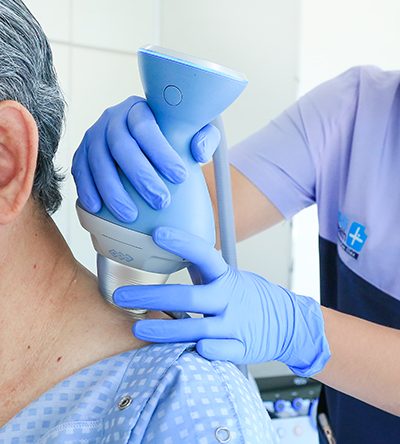
Does Shock Wave Therapy For Pain in New York, NY Help Tendon Pain?
It can, especially when tendon pain is persistent and tied to repeat loading. Shockwave is often used as part of a broader plan that includes progressive strengthening and corrected movement mechanics, because tendon tissue typically improves when load is reintroduced in a controlled way.
When It Tends To Fit Best:
- Pain has lasted long enough to plateau with basic rest or simple stretching
- Symptoms are predictable with certain loads (stairs, walking, training, work tasks)
- The plan includes strength progression, not only treatment sessions
How Shockwave Fits Into a Rehab Plan
Shockwave Therapy for Pain Relief is most helpful when you pair it with progressive strengthening and movement retraining that targets the weak link. That could mean calf and foot strength for heel pain, hip control for knee and Achilles strain, or shoulder stability for tendon irritation around the shoulder girdle. Your sessions should also include a pacing plan so you don’t spike activity right after treatment and restart inflammation.
What A Combined Plan Usually Includes:
- Load management that keeps you active without provoking major flare-ups
- Strengthening progressions that increase tissue capacity week by week
- Mechanics coaching so you stop feeding the same strain pattern
- Re-checks to confirm improvement in real tasks (walking, stairs, standing time)
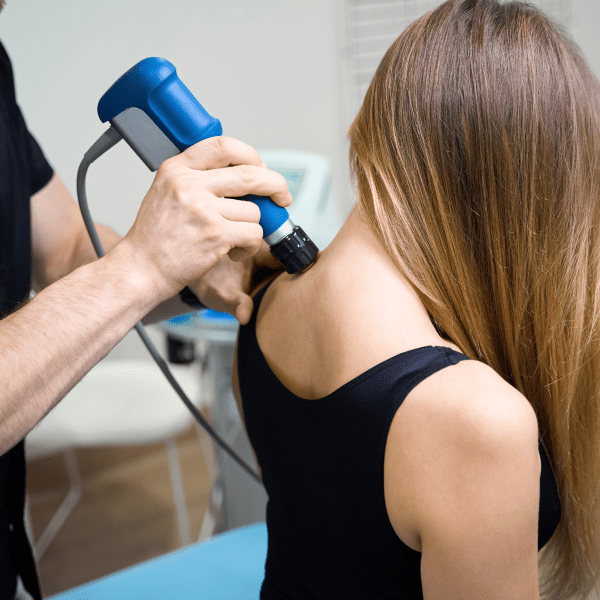
What to Expect During Treatment Sessions
Your clinician applies shockwave in a controlled way to the targeted area, often adjusting intensity based on sensitivity and tissue response. Many people describe it as uncomfortable but tolerable, and most protocols involve a short series with reassessment. The important part is what happens between sessions: your home plan and load management determine whether the tissue calms down and adapts.
Typical Expectations Include:
- A short course of sessions with progress checks
- Guidance on activity modification so you don’t overwhelm the tissue
- Strength and mobility work that supports longer-term stability
- A plan for what “better” looks like beyond pain (walking, stairs, work tolerance)
When Balance and Fall-Risk Overlap With Pain
If pain has made you shorten steps, avoid full weight-bearing, or feel uncertain on stairs, your care plan may include Balance Training in New York, NY so you rebuild steadiness along with tissue tolerance. This is especially relevant when foot, ankle, knee, or hip pain has altered how you move day to day.
Why This Matters:
- A safer gait pattern reduces repeated strain on irritated tissue
- Better balance lowers the risk of compensations and secondary pain
- Confidence in walking improves adherence to rehab progressions
Confidence in walking improves adherence to rehab progressions
Book Shockwave Therapy for Stable Results
Stubborn soft-tissue pain improves fastest when treatment is paired with a clear loading plan and measurable progress, not random rest and repeated flare-ups. Shockwave can be a useful tool when the pattern fits, especially for tendon and fascia issues that have plateaued, but the long-term win comes from restoring strength, mechanics, and tolerance so daily activity stops re-triggering symptoms. Rehab One can guide you through the right screening, a structured series when appropriate, and a rehab plan built around function so your results hold during walking, stairs, work, and training.